Why a Bored Dog Becomes a Difficult Dog
Most of what looks like bad behavior is a dog with too much energy and nobody to spend it on.
October 13, 2026 · 4 min read
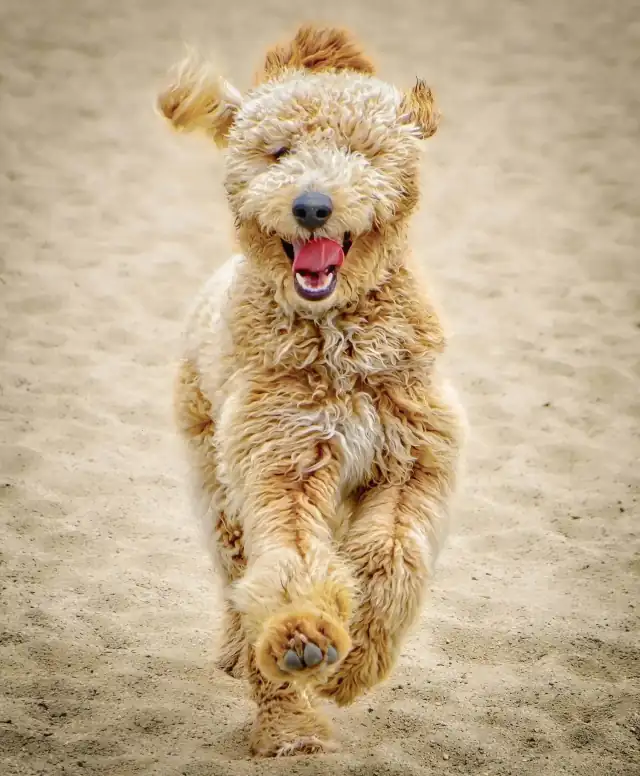
You come home to a chewed shoe, a shredded pillow, or a neighbor's note about barking. Your dog looks guilty. The truth is simpler. She had a long, empty day and found something to do with it. The walking page at Born To Run SF puts it in one line: "Boredom and a lack of social interaction can lead to behavior issues." Here's what that means in a San Francisco apartment, and what actually helps.
What boredom looks like
Dogs don't sit quietly when they're bored. They invent jobs. The common ones are easy to spot once you know them:
- Chewing things that aren't toys: shoes, remotes, couch corners.
- Barking or howling at every sound in the hallway or on the street.
- Pacing, circling, or following you from room to room.
- Digging at rugs, bedding or the door.
- Bolting for the door the second it opens.
- Getting wound up at night, when you finally want to rest.
None of those are signs of a bad dog. They're signs of a dog with energy and curiosity and no outlet. Dogs were shaped over a very long time to work, herd, hunt and travel alongside people. A quiet apartment for eight hours asks a lot of an animal like that.
Exercise is only half of it
People often hear "bored" and think "needs more exercise." That's part of it. A dog who has run hard sleeps harder and settles easier. But physical exercise alone doesn't cover everything a dog needs.
Think about the other half. Dogs need to use their noses. They need new places to investigate. They need to read other dogs and be read in return. A lap of the block on a short leash gives the legs a little work and the brain almost nothing. That's why a dog can get a walk every day and still be climbing the walls.
Why company changes things
The line from the walking page says "social interaction" on purpose. Dogs are social animals. A day alone isn't neutral for a dog. It's a long stretch of nothing to do and nobody to do it with.
In a pack, your dog gets the things a person can't fully give her. She plays at dog speed. She learns manners from dogs who correct her gently. She gets chased, and then she gets to do the chasing. A dog whose social needs have been met somewhere else is often calmer at home, and a lot less likely to spend the evening on your ankles.
Robert describes the end of the pack day this way: "After 1 1/2 to 3 hours of fun out with friends, your dog is returned home" and the page promises "Happy and Exhausted!" That tired, satisfied dog on the couch is the opposite of the chewed-pillow dog.
What the pack adds that a solo walk can't
Born to Run SF takes dogs on daily adventures to San Francisco beaches and parks, and the pack comes along. That mix does a few things at once. It gives variety of place, because the beach, the park and the trail all smell different. It gives variety of company, because different dogs play differently. And it gives structure, because the same group goes out day after day.
Decker F, a pack client, wrote that Bea is 9 and "in great shape" after years with the pack, and credited the "activity and socializing" she gets. You don't need to take that as science. Take it as an owner noticing what a regular routine of running and friends did for his dog.
What you can do on the days you can't get out
Nobody gets a perfect schedule. On days when the pack isn't an option, these simple moves still help:
- Make the walk a sniff walk. Let your dog stop and read the sidewalk for five minutes. That's real work for her brain.
- Feed from a puzzle toy or scatter her meal in a towel instead of a bowl.
- Practice two or three short training games, like sit, down and come, for a few minutes at a time.
- Rotate toys. A toy she hasn't seen in a week is a new toy.
- Give her a chew you trust her with, and stay in the room the first few times.
These aren't a substitute for company. They're a bridge for the days you need one.
When it isn't boredom
Some behavior has other causes. If something is new or sudden, if your dog seems anxious rather than bored, or if the behavior is getting worse, talk to your vet and a trainer. Boredom is common, but it isn't the answer to everything. A good walker will tell you honestly when they think the problem is bigger than exercise.
If your dog is the one waiting by the door, Robert would like to hear about her. Call him at 415.516.9541, or read how the pack works at /san-francisco-dog-walking.
Born To Run San Francisco, 415.516.9541
Call 415.516.9541More articles
What a Pack Walk Day Looks Like in San Francisco
Here is the whole day from your dog's side, from the pickup at your door to the flop on the couch.
How to Get a Great Portrait of a Dog Who Won't Sit Still
You don't need a perfect sit. You need a photographer who works with the dog you have.